|
How to Take Cuttings |

|
How to Clone Plants Introduction Cloning Basics Clones are by definition, "a group of genetically identical cells descended from a single common ancestor." cloning, or clonal propagation, is a highly efficient method of reproducing any plant type - yielding an exact genetic replica of the plant. In clonal propagation, roots are induced from a portion of the stem, root, or leaf - an exciting alternative to growing plants from seed. Clones an be taken from a favourite plant and by repeating thecloning Procedure, you can grow the strain continually and indefinitely.
THE BEST TIME TO TAKE CUTTINGS.... Some cutting from the same mother plant may root while others may not. There may be a 'best time to take cuttings from the plant. Rooting of cuttings is affected by many variables. Some plants have different rooting ability at different times of the year A few weeks difference in taking of cuttings may produce success or failure. Woody plants are especially influenced by timing. After a certain age, often years, some plants may even have difficulty producing cuttings viable to produce roots.
Materials TOOLS REQUIRED:
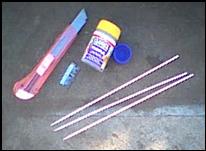
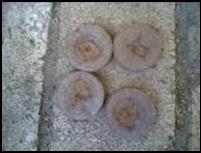
Knife, Clonex Jiffy Pellets Clone Box
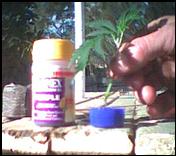
1... A Sharp Knife or Razor Blade... 2.. Clonex or Another Rooting Gel Or Powder.. 3.. A Small Lid, Container,, For Placing Clonex in ,, As Unless doing a Thousand Cuttings... Container will last a Year or so. Unless Contaminated... 4... Wooden Skewer... Used to Place Holes in the Jiffy Pots or Rockwool Cubes 5... Jiffy Pots and/or Rockwool cubes... I Personally Prefer Jiffy Pots.... You seem to get a Better Rate of Survival.... 6...Spray Bottle 7...Clone Box, Used to House the Clones... During the Rooting Stage. 8... Oh a Mother Plant (To take the Clones from)
Taking the Cuttings
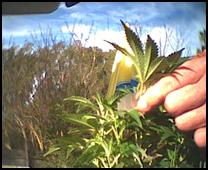
1... Get your mother Plant... Make sure, there is plenty of growth..... Prepare Jiffy pot, By Making a Hole in with the Skewer Leave Aside.... Find a Branch,,,That Has a Few Sets of Leaves on
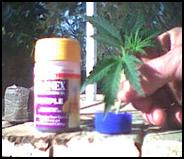
Cut Just Below a Node About 10 - 15 cm (4 - 6 inches) Strip the Bottom Few Leaves off, Then Dip into the Clonex (or any rooting compound)
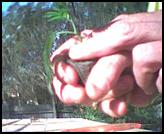
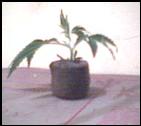
Get The Jiffy Pot... Place the Dipped Clone into the Jiffy Pot. Press around the Jiffy Pot, So as The Clone is in Firm,
Then It’s ready for the Clone Box
Housing the Clones
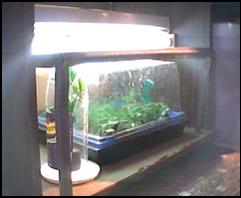
Once you Have taken the Cuttings, You Need to Put them , AS SOON AS POSSIBLE.... Into A Clone Box, Placed under Soft Light...e.g... Fluro's... A small Cabinet ,, With a Double " 2 foot" Fluro Inside,,,, Is all that you need...
Then Mist the Clones with Water Daily... Until they Root (10 -14 Days)...Then Transplant....
Clone Boxes
BASIC CLONE SETUP...
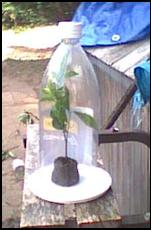
The Easiest and most simple Clone Box... A 2Litre Bottle ,,can House 3 Plants , a 3 Litre, 4 - 5 plants...As the Roots Protrude,, Take off the Cap.. Leave for a Few Days, Then Transplant... NB: Mist Once a Day, with Water... Keep Jiffy pot Damp....... NOT WET....
CLONE BOX:
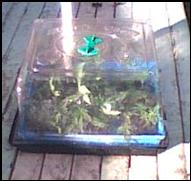
This Box, Can be purchased at Most Garden Stores, It Can hold 30 Jiffy pots.... Rockwool Cubes...
Hints and tips
It is essential that your cuttings (sometimes referred to as clones or slips) be taken from healthy plants. All plants differ in their preference of pH range. Find out the pH range for your particular plant. As a general rule of thumb, a pH range of 5.5 to 6.5 is best for most plants.
Check your pH level daily and adjust to proper level. Be gentle when taking cuttings. They can shock easily when cut.
Always use a sterile growing medium; be it Rockwool, soil, vermiculite, perlite, sand, etc. Never use soil l from your garden.
Always keep tools clean to avoid transmitting disease to open plant wounds. Sterilize them before each use if possible. Keep your growing medium warm around-the-clock for best results.
Bottom heat (with a heating pad) will help cuttings root faster.
Bottom heat: 75-85F (24-30C). Greenhouse/indoor temperature air, bench level):70F (21C).
A plastic cover (humidity dome or tent) will increase your percentage of roots cuttings.
Remember to keep your room temperature warm during the night or lights-out cycle if propagating indoors. Add a space heater if necessary.
Excessive watering can cause cuttings to wilt or cause stem rot. The idea is to keep the growing medium or soil moist only.
Try to keep all your cuttings around the same height. This allows each cutting to receive the same amount of light.
If you are using outdoor sunlight, screen your cuttings from the direct sun or place in a shady area under a tree.
If using high intensity discharge (HID) lighting, either sodium or metal halide give cuttings a full 18 hours of light. A 6 hour night cycle is recommended for optimum results.
Once roots appear, your cuttings can take stronger, more intense light, either HID or outdoor sunlight. Place your lights as close as possible. In other words, the closer the lights are to your plants, the faster your plants will grow . Transplant as soon as vigorous roots appear. |



|
Copyright TheHippySeedCompany 1998— 2012 |






|
The Hippy Seed Company |
|
Be Excellent to each Other. |